7 Ways to Maintain Muscle on GLP-1 Medications

Last Updated: November 1, 2026
Quick Summary
To maintain muscle on GLP-1, eat roughly 1.6 grams of protein per kilogram of body weight daily and do strength training 2 to 3 times per week, hitting every major muscle group. Protein-dense meals, shakes on low-appetite days, and tracking your lifts help protect muscle while fat comes off.
- Average daily steps fell from 5,047 to 4,487 after starting GLP-1 medication.
- For a 200-pound adult, the protein target lands near 145 grams per day.
- Train three days per week on nonconsecutive days, with sessions lasting 35 to 45 minutes.
- Keep moderate-intensity cardio to 150 minutes per week to protect muscle retention.
- Aim for roughly half your body weight in ounces of water daily.
Table of Contents
- Why Muscle Loss on Semaglutide Happens and What It Really Means
- How Much Protein Intake on GLP-1 Do You Actually Need?
- GLP-1 Strength Training: How Often and How Hard
- Best Exercises While Taking GLP-1: A Beginner-Friendly Plan
- Managing Low Appetite, Nausea, and Missed Nutrition
- How to Track Muscle and Strength Changes During Weight Loss
- Build Your Muscle-Preservation Stack with Combat Nutra
- Frequently Asked Questions
Why Muscle Loss on Semaglutide Happens and What It Really Means
Muscle loss on semaglutide is a real risk, but it is not inevitable if you maintain muscle on GLP-1 with protein and resistance work.
Muscle preservation on GLP-1 is best treated as a training problem, not just a diet problem. The medication kills appetite. If you do not defend your muscle with protein and resistance work, your body will break it down for fuel.
Lean Mass vs. Skeletal Muscle: What the Scale Doesn't Tell You
Lean mass is everything in your body that is not fat, including water, bone, and organs. A 2026 review in Nature's coverage of GLP-1 receptor agonists at obesity doses notes that lean mass and muscle mass are not the same thing.
That distinction matters. Some of the weight you lose on a GLP-1 is water and glycogen. Some is fat. Some may be muscle. The scale cannot tell you which.
How Much Protein Intake on GLP-1 Do You Actually Need?
Protein intake on GLP-1 needs to be deliberate, because reduced appetite makes it easy to under-eat. A practical starting target is roughly 1.6 grams of protein per kilogram of body weight daily, adjusted with your clinician for age, activity, and kidney health.
The hard part is fitting that into a smaller appetite. A 2025 review in PubMed Central on muscle loss during GLP-1 therapy lists reduced protein intake as one contributor to muscle loss. So protein is not optional here.
High-Protein Foods and Shakes That Fit a Reduced Appetite
Small, protein-dense meals beat large ones you cannot finish. Build each meal around a protein source first, then add vegetables and carbs.
- Fish: salmon, tuna, and cod pack protein into small portions
- Beans and chickpeas: fiber plus plant protein in one bowl
- Tofu: absorbs flavor, easy on a queasy stomach
A shake is our default recommendation on low-appetite days. CN Operator Whey Protein Blend (Vanilla) delivers 22 grams of protein per serving from whey isolate and concentrate, and it mixes into 8 to 12 ounces of cold water.

GLP-1 Strength Training: How Often and How Hard
GLP-1 strength training should happen 2 to 3 times per week, hitting every major muscle group. A 2025 review in PubMed Central on lean tissue preservation found that participants in the included studies did structured activity 4 to 7 days per week, with resistance training 3 to 5 days per week. That is a research snapshot, not a prescription. Start where you can recover.
Hard enough to matter means the last two reps feel tough. Not grinding, not sloppy. If you can do 15 easy reps, the weight is too light.
Creatine monohydrate is a widely researched supplement for strength work. CN FORGE Creatine Monohydrate is pure creatine monohydrate with no fillers or proprietary blends. If you are deciding which type to buy, our guide on which creatine monohydrate is best for strength training breaks down the options.

Best Exercises While Taking GLP-1: A Beginner-Friendly Plan
The best exercises while taking GLP-1 are compound movements that train several muscles at once. They give you the most muscle-preserving return for the least time and energy, which matters when appetite and fuel are low.
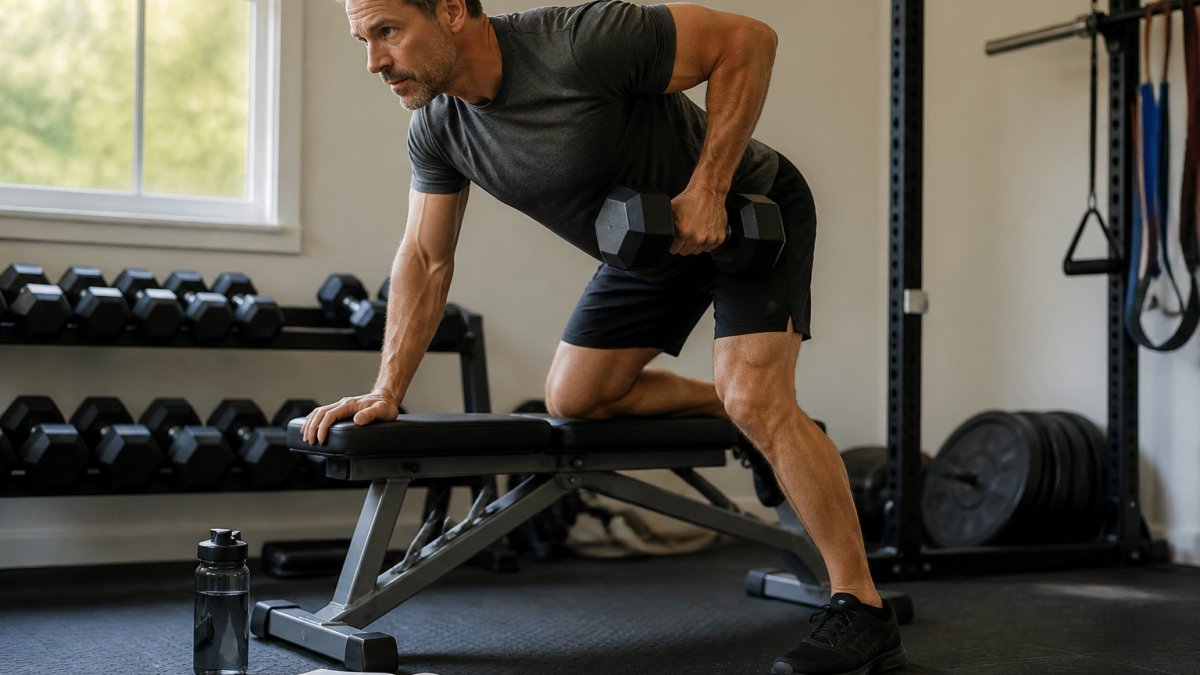
The Weekly Schedule
Train three days per week on nonconsecutive days (for example, Monday, Wednesday, Friday). Each session should take 35 to 45 minutes, including a five-minute warm-up of light cardio and dynamic stretches.
| Day | Focus | Exercises | Sets x Reps | Rest |
|---|---|---|---|---|
| 1 | Push | Dumbbell bench press, overhead press, push-up (or incline push-up) | 3 x 8-12 | 60-90 sec |
| 2 | Pull | One-arm dumbbell row, deadlift (dumbbell or trap-bar), dumbbell curl | 3 x 8-12 | 60-90 sec |
| 3 | Legs and core | Goblet squat, weighted step-up, plank | 3 x 10-15 (plank 3 x 20-40 sec) | 60-90 sec |
On off days, walk for 20 to 30 minutes or do light cycling, yoga, or Pilates. Keep cardio low-intensity on lifting days so it does not eat into recovery.
How to Pick Starting Weights
Choose a weight that lets you complete all prescribed reps with clean form, leaving about two reps in reserve on the last set. If you cannot hit the bottom of the rep range, go lighter. If you can easily exceed the top of the range, go heavier next time. A common mistake is starting too heavy because motivation is high early in a GLP-1 journey; that leads to soreness and skipped sessions.
Progression Rules
- Weeks 1-2: Master form with light weights. Aim for the bottom of the rep range.
- Weeks 3-4: Add one rep per set each week until you reach the top of the range.
- Weeks 5-6: Once you hit the top of the rep range on all sets, increase the weight by 5 to 10 percent and drop back to the bottom of the rep range.
Track every session in a notebook or app. If your lifts stall for two consecutive weeks, reduce volume by one set per exercise for a week before resuming progression.
Adaptations for Different Fitness Levels
- Complete beginner or low mobility: Start with two sets per exercise and use a chair or wall for support on squats and push-ups. Swap the deadlift for a hip hinge with a broomstick until form is solid.
- Intermediate: Add a fourth training day focused on weak points, or superset opposing muscle groups (for example, bench press with rows) to save time.
- Older adults or anyone with joint pain: Use machines or resistance bands for pressing and rowing, and substitute step-ups with sit-to-stands. Prioritize slow, controlled tempo over load.
What About Cardio?
Cardio supports heart health and weight maintenance, but excessive endurance work can interfere with muscle retention when calories are low. Keep moderate-intensity cardio to 150 minutes per week, and avoid fasted long runs on low-appetite days. If you feel dizzy or unusually fatigued, cut the session short and eat a protein-containing snack.
Start light, log your work, and add load only when you finish all sets with clean form. Consistency over eight weeks beats intensity in the first week.
CN Operator Whey Protein Blend (Vanilla) →
Managing Low Appetite, Nausea, and Missed Nutrition
Low appetite is the main reason people miss their protein target on a GLP-1. Nausea makes it worse. The fix is not willpower; it is a system of timing, texture, and portion strategies that work with the medication instead of against it. This is the area most guides gloss over, yet it is where muscle preservation is won or lost.
Time Meals Around Your Medication
Appetite suppression is often strongest in the 24 to 48 hours after a weekly injection. Many people find they can eat more comfortably later in the week. Use that window strategically:
- Injection day and the day after: Rely on protein shakes, Greek yogurt, cottage cheese, and eggs. These are low-volume and easy to tolerate.
- Midweek: Schedule your largest solid meals and your hardest strength sessions when appetite is better.
- Two days before your next dose: Front-load protein and calories to build a buffer.
If you take a daily GLP-1, keep a simple log for two weeks to identify your personal appetite pattern, then plan around it.
Portion and Texture Strategies
- Eat protein first at every meal, before vegetables or carbs, so you fill up on what protects muscle.
- Choose cold or room-temperature foods when nausea hits; hot food aromas can trigger queasiness.
- Split intake into four to five small meals or snacks instead of three large ones.
Hydration and Electrolytes
Dehydration can mimic hunger and worsen fatigue and dizziness. Aim for roughly half your body weight in ounces of water daily (for example, 100 ounces for a 200-pound adult), adjusted for heat and activity. If you are sweating or feeling lightheaded, add an electrolyte drink or a pinch of salt to your water. Sip throughout the day rather than gulping large amounts at once, which can feel uncomfortable on a GLP-1.
When Solid Food Is a Struggle
On days when you cannot finish a meal, prioritize liquid calories and protein:
- A protein shake with milk or a milk alternative
- A smoothie with Greek yogurt, protein powder, and frozen fruit
- Cottage cheese or Greek yogurt with soft fruit
- A bowl of broth-based soup with shredded chicken or tofu
One shake can close most of a 30-gram protein gap. Keep single-serve options in your fridge or bag so there is no friction when appetite is low.
Warning Signs That Need Clinical Attention
Contact your prescribing clinician if you experience:
- Persistent vomiting or inability to keep fluids down for more than 24 hours
- Signs of dehydration: dark urine, dizziness on standing, rapid heartbeat
- Unintentional weight loss exceeding 1 to 2 pounds per week after the first month
These may signal more than ordinary appetite suppression and warrant prompt evaluation.
Build a rotation of three or four tolerated protein sources, plan around your injection schedule, and treat hydration as part of your muscle-preservation plan, not an afterthought.
How to Track Muscle and Strength Changes During Weight Loss
Track strength and function, not just the scale. Body composition changes during weight loss, and the scale cannot separate fat from muscle.
Use these markers monthly:
- Strength log: are your main lifts holding or climbing?
- Grip and function: stairs, carrying groceries, getting off the floor
- Waist and photos: a better fat-loss signal than weight alone
If your lifts stall for weeks, our guide on how to break through fitness plateaus gives you a step-by-step plan to reset.
Build Your Muscle-Preservation Stack with Combat Nutra
To maintain muscle on GLP-1, you need three habits: enough protein, resistance training, and honest tracking. Miss one and the others work harder to cover for it. Get all three and you protect the muscle you have while the fat comes off.
CN RESUPPLY GLP-1 Support combines magnesium, probiotics, digestive enzymes, ginger, and peppermint with methylated B vitamins, zinc, and vitamin D3 to support digestive comfort and steady nutrient intake.

Browse the Combat Nutra catalog to find products that fit your routine.
Frequently Asked Questions
How much protein should you eat to maintain muscle while taking a GLP-1?
Aim for a protein intake on GLP-1 that scales with your body size and activity level, then spread it across three or four meals. Protein adequacy matters for preserving muscle during GLP-1-induced weight loss. Because appetite is reduced, prioritize protein first at every meal and use a shake to close the gap on low-appetite days.
Can you build muscle while taking semaglutide or another GLP-1 medication?
Building muscle while in a calorie deficit is harder but not impossible, and it depends on three inputs: enough protein, progressive resistance training, and recovery. Muscle loss on semaglutide and other GLP-1 receptor agonists is multifactorial, involving factors such as reduced protein intake and negative energy balance. That means no single supplement prevents it. Treat strength training and protein as the foundation, and use creatine monohydrate as a supporting tool rather than a substitute for either.
How often should you strength train while taking a GLP-1?
Start with two full-body sessions per week and build toward three or four as recovery allows. Exercise frequency during GLP-1-induced weight loss varies, and no single range is a universal rule. What matters more is progressive overload: add weight or reps over time so your muscles get a reason to stay.
Doesn't lean mass loss just mean muscle loss?
Not automatically. Lean mass refers to fat-free mass, which includes water, organ tissue, and bone as well as muscle, so a drop in lean mass alone does not establish how much muscle was lost. This matters because scale-based body composition tools can overstate the problem. Track strength and function alongside body composition: if your lifts hold or climb while weight drops, your muscle is doing its job.
Losing muscle on a GLP-1 is a choice you can decline. The medication changes your appetite, not your biology. Feed the muscle, train it, and track it. If you want a stack built for that mission, our GLP-1 support formula, whey protein, and creatine are made in the USA, third-party tested, and free of proprietary blends. Get started with Combat Nutra and keep your strength while you lose the weight.
